
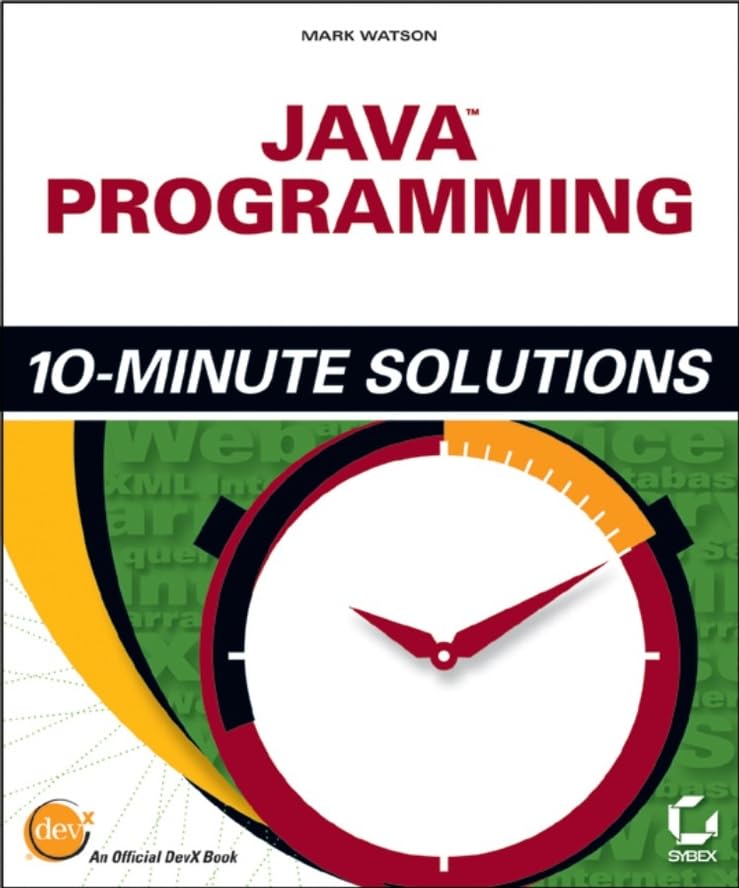
Amazon cover image
Image from Amazon.com

Java programming 10-minute solutions [electronic resource] / Watson, Mark.

By: Call Number: Ebook Material type: TextLanguage: English Publication details: WILEY, 2006.Description: 333 pISBN:
  • 0782142850
  • 9780782151336
Subject(s): Online resources:
Contents:
Chapter, Lesson, Part File I/O.
Chapter, Lesson, Part Solution 1: Copying and Deleting Directories and Files.
Chapter, Lesson, Part Solution 2: Reading and Writing JAR/ZIP Files.
Chapter, Lesson, Part Solution 3: Java Object Persistence with Serialization.
Chapter, Lesson, Part Solution 4: Using Random Access File I/O.
Chapter, Lesson, Part Solution 5: Writing Text Filters.
Chapter, Lesson, Part String Handling.
Chapter, Lesson, Part Solution 6: Efficiently Performing Multiple Replacements.
Chapter, Lesson, Part Solution 7: Using Regular Expressions for Information Extraction.
Chapter, Lesson, Part Solution 8: Using Java Properties to Configure Applications.
Chapter, Lesson, Part XML Processing.
Chapter, Lesson, Part Solution 9: Using DOM to Manipulate XML Documents in Memory.
Chapter, Lesson, Part Solution 10: Using SAX to Efficiently Parse XML.
Chapter, Lesson, Part Solution 11: Transforming XML with XSLT.
Chapter, Lesson, Part Solution 12: Using Java XML Binding.
Chapter, Lesson, Part Distributed Programming Using XML.
Chapter, Lesson, Part Solution 13: Using XML-RPC for Client/Server Programming.
Chapter, Lesson, Part Solution 14: Using XML over HTTP for Web Services.
Chapter, Lesson, Part Solution 15: Using GLUE for SOAP-Based Web Services.
Chapter, Lesson, Part Solution 16: Using Apache Axis for SOAP-Based Web Services.
Chapter, Lesson, Part Arrays, Vectors, and Hash Tables.
Chapter, Lesson, Part Solution 17: Efficient Conversion Between Arrays and Vectors.
Chapter, Lesson, Part Solution 18: Save Memory in Java Applications.
Chapter, Lesson, Part Solution 19: Implementing Sorted Key Hash Tables.
Chapter, Lesson, Part Searching and Sorting.
Chapter, Lesson, Part Solution 20: Using Depth First Search.
Chapter, Lesson, Part Solution 21: Making Searches More Space Efficient: Iterative Deepening Search.
Chapter, Lesson, Part Solution 22: Making Searches More CPU Efficient: A* Search.
Chapter, Lesson, Part Solution 23: Using Merge Sort in Applications.
Chapter, Lesson, Part Solution 24: Using Quicksort in Applications.
Chapter, Lesson, Part Threads.
Chapter, Lesson, Part Solution 25: Using Work Threads for Background Processing.
Chapter, Lesson, Part Solution 26: Efficient Thread Synchronization.
Chapter, Lesson, Part Solution 27: Controlling Your Applications Using Thread Groups and Custom Security Managers.
Chapter, Lesson, Part Network Programming.
Chapter, Lesson, Part Solution 28: Programming with Server Sockets.
Chapter, Lesson, Part Solution 29: Writing Client Socket Applications.
Chapter, Lesson, Part Solution 30: Using Server-Side RMI.
Chapter, Lesson, Part Solution 31: Writing RMI Clients.
Chapter, Lesson, Part Solution 32: Using Server-Side CORBA.
Chapter, Lesson, Part Solution 33: Writing CORBA Clients.
Chapter, Lesson, Part JDBC Database Access.
Chapter, Lesson, Part Solution 34: Configuring JDBC.
Chapter, Lesson, Part Solution 35: Performing Database Updates.
Chapter, Lesson, Part Solution 36: Performing Database Queries.
Chapter, Lesson, Part Solution 37: Performing Batch Updates.
Chapter, Lesson, Part Solution 38: Using Transactions to Insure Data Integrity.
Chapter, Lesson, Part Solution 39: Dynamic Database Exploration Using the Metadata API.
Chapter, Lesson, Part Java Servlets.
Chapter, Lesson, Part Solution 40: Handling Browser Requests.
Chapter, Lesson, Part Solution 41: Handling Form Data.
Chapter, Lesson, Part Solution 42: Performing Custom Servlet Initialization.
Chapter, Lesson, Part Solution 43: Using Cookies and Session Data for Personalizing a Website.
Chapter, Lesson, Part Solution 44: Handling Runtime Errors.
Chapter, Lesson, Part Java ServerPages (JSPs).
Chapter, Lesson, Part Solution 45: Using JSP Declarations and Directives.
Chapter, Lesson, Part Solution 46: Handling Login Forms.
Chapter, Lesson, Part Solution 47: Using JavaBeans with JSPs.
Chapter, Lesson, Part Solution 48: Handling User Sessions.
Chapter, Lesson, Part Solution 49: Using the Struts Tag Libraries and MVC Architecture.
Chapter, Lesson, Part Enterprise JavaBeans (EJBs).
Chapter, Lesson, Part Solution 50: Using Stateless Session EJBs to Develop Web Applications.
Chapter, Lesson, Part Solution 51: Using Container Managed Persistent EJBs to Simplify Database Access.
Chapter, Lesson, Part Solution 52: Using Message-Driven EJBs for Asynchronous Processing.
Chapter, Lesson, Part Solution 53: Using Container Managed Transactions for Database Integrity.
Chapter, Lesson, Part Ant, JUnit, and XDoclet.
Chapter, Lesson, Part Solution 54: Installing Ant, JUnit, and XDoclet.
Chapter, Lesson, Part Solution 55: Using Ant.
Chapter, Lesson, Part Solution 56: Using Ant for JSP/Struts Tomcat Projects.
Chapter, Lesson, Part Solution 57: Using Ant and XDoclet for EJB/JBoss Projects.
Chapter, Lesson, Part Solution 58: Writing JUnit Test Classes.
Chapter, Lesson, Part Java Data Objects.
Chapter, Lesson, Part Solution 59: Object Persistence with the Hibernate JDO Implementation.
Chapter, Lesson, Part Solution 60: Database Queries with Hibernate.
Cover, Title,Java programming 10-minute solutions--Preface, Introduction, TOC,Acknowledgments--Preface, Introduction, TOC,Contents--Preface, Introduction, TOC,Introduction--References, Appendix, Index,Index.
Star ratings
    Average rating: 0.0 (0 votes)
No physical items for this record

Chapter, Lesson, Part File I/O.

Chapter, Lesson, Part Solution 1: Copying and Deleting Directories and Files.

Chapter, Lesson, Part Solution 2: Reading and Writing JAR/ZIP Files.

Chapter, Lesson, Part Solution 3: Java Object Persistence with Serialization.

Chapter, Lesson, Part Solution 4: Using Random Access File I/O.

Chapter, Lesson, Part Solution 5: Writing Text Filters.

Chapter, Lesson, Part String Handling.

Chapter, Lesson, Part Solution 6: Efficiently Performing Multiple Replacements.

Chapter, Lesson, Part Solution 7: Using Regular Expressions for Information Extraction.

Chapter, Lesson, Part Solution 8: Using Java Properties to Configure Applications.

Chapter, Lesson, Part XML Processing.

Chapter, Lesson, Part Solution 9: Using DOM to Manipulate XML Documents in Memory.

Chapter, Lesson, Part Solution 10: Using SAX to Efficiently Parse XML.

Chapter, Lesson, Part Solution 11: Transforming XML with XSLT.

Chapter, Lesson, Part Solution 12: Using Java XML Binding.

Chapter, Lesson, Part Distributed Programming Using XML.

Chapter, Lesson, Part Solution 13: Using XML-RPC for Client/Server Programming.

Chapter, Lesson, Part Solution 14: Using XML over HTTP for Web Services.

Chapter, Lesson, Part Solution 15: Using GLUE for SOAP-Based Web Services.

Chapter, Lesson, Part Solution 16: Using Apache Axis for SOAP-Based Web Services.

Chapter, Lesson, Part Arrays, Vectors, and Hash Tables.

Chapter, Lesson, Part Solution 17: Efficient Conversion Between Arrays and Vectors.

Chapter, Lesson, Part Solution 18: Save Memory in Java Applications.

Chapter, Lesson, Part Solution 19: Implementing Sorted Key Hash Tables.

Chapter, Lesson, Part Searching and Sorting.

Chapter, Lesson, Part Solution 20: Using Depth First Search.

Chapter, Lesson, Part Solution 21: Making Searches More Space Efficient: Iterative Deepening Search.

Chapter, Lesson, Part Solution 22: Making Searches More CPU Efficient: A* Search.

Chapter, Lesson, Part Solution 23: Using Merge Sort in Applications.

Chapter, Lesson, Part Solution 24: Using Quicksort in Applications.

Chapter, Lesson, Part Threads.

Chapter, Lesson, Part Solution 25: Using Work Threads for Background Processing.

Chapter, Lesson, Part Solution 26: Efficient Thread Synchronization.

Chapter, Lesson, Part Solution 27: Controlling Your Applications Using Thread Groups and Custom Security Managers.

Chapter, Lesson, Part Network Programming.

Chapter, Lesson, Part Solution 28: Programming with Server Sockets.

Chapter, Lesson, Part Solution 29: Writing Client Socket Applications.

Chapter, Lesson, Part Solution 30: Using Server-Side RMI.

Chapter, Lesson, Part Solution 31: Writing RMI Clients.

Chapter, Lesson, Part Solution 32: Using Server-Side CORBA.

Chapter, Lesson, Part Solution 33: Writing CORBA Clients.

Chapter, Lesson, Part JDBC Database Access.

Chapter, Lesson, Part Solution 34: Configuring JDBC.

Chapter, Lesson, Part Solution 35: Performing Database Updates.

Chapter, Lesson, Part Solution 36: Performing Database Queries.

Chapter, Lesson, Part Solution 37: Performing Batch Updates.

Chapter, Lesson, Part Solution 38: Using Transactions to Insure Data Integrity.

Chapter, Lesson, Part Solution 39: Dynamic Database Exploration Using the Metadata API.

Chapter, Lesson, Part Java Servlets.

Chapter, Lesson, Part Solution 40: Handling Browser Requests.

Chapter, Lesson, Part Solution 41: Handling Form Data.

Chapter, Lesson, Part Solution 42: Performing Custom Servlet Initialization.

Chapter, Lesson, Part Solution 43: Using Cookies and Session Data for Personalizing a Website.

Chapter, Lesson, Part Solution 44: Handling Runtime Errors.

Chapter, Lesson, Part Java ServerPages (JSPs).

Chapter, Lesson, Part Solution 45: Using JSP Declarations and Directives.

Chapter, Lesson, Part Solution 46: Handling Login Forms.

Chapter, Lesson, Part Solution 47: Using JavaBeans with JSPs.

Chapter, Lesson, Part Solution 48: Handling User Sessions.

Chapter, Lesson, Part Solution 49: Using the Struts Tag Libraries and MVC Architecture.

Chapter, Lesson, Part Enterprise JavaBeans (EJBs).

Chapter, Lesson, Part Solution 50: Using Stateless Session EJBs to Develop Web Applications.

Chapter, Lesson, Part Solution 51: Using Container Managed Persistent EJBs to Simplify Database Access.

Chapter, Lesson, Part Solution 52: Using Message-Driven EJBs for Asynchronous Processing.

Chapter, Lesson, Part Solution 53: Using Container Managed Transactions for Database Integrity.

Chapter, Lesson, Part Ant, JUnit, and XDoclet.

Chapter, Lesson, Part Solution 54: Installing Ant, JUnit, and XDoclet.

Chapter, Lesson, Part Solution 55: Using Ant.

Chapter, Lesson, Part Solution 56: Using Ant for JSP/Struts Tomcat Projects.

Chapter, Lesson, Part Solution 57: Using Ant and XDoclet for EJB/JBoss Projects.

Chapter, Lesson, Part Solution 58: Writing JUnit Test Classes.

Chapter, Lesson, Part Java Data Objects.

Chapter, Lesson, Part Solution 59: Object Persistence with the Hibernate JDO Implementation.

Chapter, Lesson, Part Solution 60: Database Queries with Hibernate.

Cover, Title,Java programming 10-minute solutions--Preface, Introduction, TOC,Acknowledgments--Preface, Introduction, TOC,Contents--Preface, Introduction, TOC,Introduction--References, Appendix, Index,Index.

There are no comments on this title.

to post a comment.
Share


Office of Academic Resources and Information Technology
      38 Moo. 8, Nawung Sub-District, Muang Phetchaburi District, Phetchaburi 76000 Thailand
    Tel: (032) 708609  Email: library_office@mail.pbru.ac.th